The discipline of chess
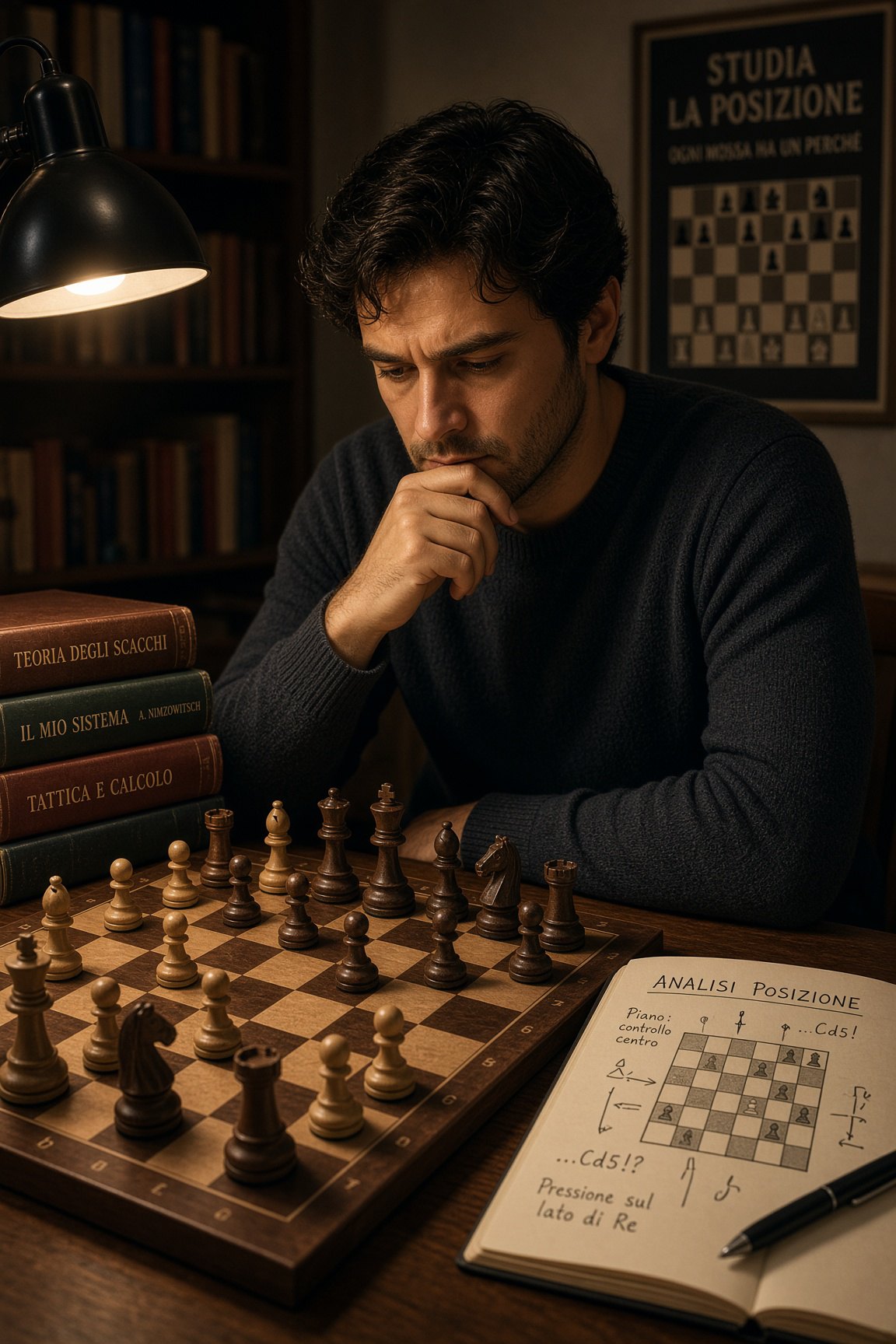
Beyond the chessboard
I have always believed that the game of chess is much more than an intellectual competition. For me, it has been, over time, a silent training ground. I do not seek victory at all costs, but rather the process of observation, analysis, and consequences that every move entails.
Study as a habit
Dedicating time to studying games, variations, and endgame logic teaches patience. In a fast-paced world, stopping to think before acting is a revolutionary act. Every piece has value, every space on the board is significant. Learning to read the board means learning to read complex situations with a critical and detached eye.
The trained mind
This dedication does not remain confined within the sixty-four squares. It transfers into how I handle unexpected events, how I manage relationships, and how I observe the world through the lens of my camera. There is geometry in light, composition in shadows, strategy in framing. Chess has helped me see these connections.
"Chess is the gymnasium of the mind."
It is not just a cliché. It is the concrete experience of someone who has learned that every action has a reaction, that error is a strict but necessary teacher, and that precision stems from consistency. This is what I carry with me, outside the playing room, into daily life and my creative work.
Back to the blog